
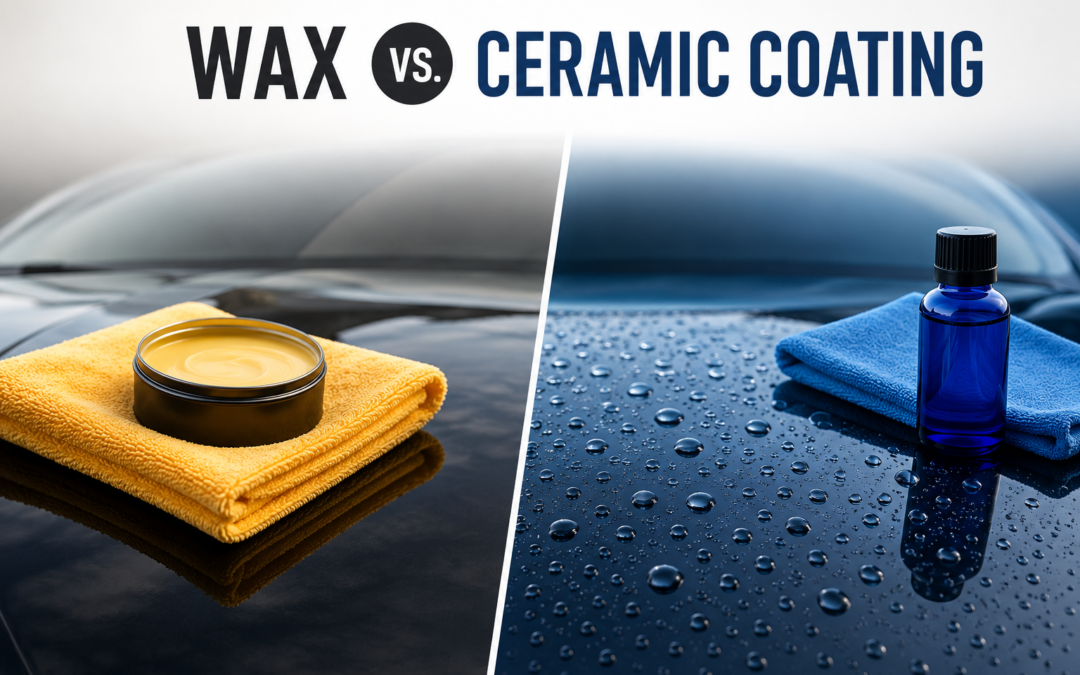
Your vehicle’s paint protects the body from environmental damage and helps maintain resale value, making Wax vs. Ceramic Coating a common comparison for drivers seeking reliable paint protection. As awareness of exterior care grows, the global paint protection film market is projected to increase from USD 1.09 billion in 2025 to USD 1.54 billion by 2030, reflecting rising demand for solutions that protect vehicles from everyday wear and environmental damage.
Daily exposure to sunlight, road grime, bird droppings, tree sap, and other contaminants gradually wears down the clear coat, leaving the finish dull and more vulnerable to fading, oxidation, and surface damage.
Both wax and ceramic coating help preserve your vehicle’s finish, but they differ in durability, maintenance requirements, and cost. This guide compares their strengths and limitations while explaining why professional buff and wax services remain an excellent choice for drivers who want a brilliant shine and dependable paint protection without committing to a long-term coating.
Why Does Your Car’s Paint Need Protection?
A vehicle’s factory paint system includes a clear coat that shields the coloured paint beneath it. While this layer is durable, it is not immune to constant environmental exposure. As contaminants accumulate and the clear coat gradually wears away, the paint becomes more susceptible to fading, oxidation, staining, and minor surface imperfections.
Several everyday factors contribute to paint deterioration:
- UV rays that fade colour and accelerate oxidation
- Bird droppings that can etch into the clear coat
- Tree sap that hardens and damages the finish
- Road dirt, dust, and grime that create swirl marks during cleaning
- Water spots caused by mineral deposits
- Airborne pollutants and industrial fallout that bond to the paint surface
Regular car washing removes many of these contaminants, but it does not provide lasting protection. Adding a protective layer through waxing or another paint protection method helps reduce direct contact between the paint and environmental elements, making the surface easier to maintain while preserving its gloss.
Protecting your vehicle’s finish also offers practical benefits beyond appearance. Well-maintained paint is less likely to require costly correction work and helps maintain your vehicle’s value over time, particularly if you plan to sell or trade it in.
What Is Car Wax?
Car wax is one of the oldest and most widely used methods of protecting automotive paint. Applied as a thin sacrificial layer over the clear coat, it creates a barrier that helps shield the paint from dirt, moisture, UV exposure, and light environmental contaminants while enhancing gloss and depth.
Modern wax products generally fall into two categories:
Natural Wax
Natural waxes, often made with carnauba wax, are valued for producing a rich, warm shine that many enthusiasts appreciate. They deliver excellent visual results but typically wear away more quickly, especially under frequent sun exposure or regular washing.
Synthetic Wax
Synthetic waxes use advanced polymers that offer improved durability and longer-lasting protection. While their appearance may differ slightly from natural wax, they generally withstand weather and repeated washing more effectively.
A professional buff and wax service delivers more than simply applying wax. Before the protective layer is added, technicians carefully buff the paint to minimize light surface imperfections, improve clarity, and restore gloss. This preparation allows the wax to bond more evenly, creating a smoother finish and a more polished appearance.
Some of the biggest advantages of choosing a professional buff and wax service in Valencia, CA, include:
- Restores shine and depth to dull paint
- Helps repel water and road grime
- Adds a protective barrier against everyday contaminants
- Makes routine washing easier
- Improves the overall appearance of older vehicles
- Offers an affordable paint protection option
Although wax provides excellent short-term protection, it naturally wears away over time. Most professional wax applications last between two and four months, depending on driving conditions, weather exposure, and how the vehicle is maintained. Drivers who enjoy keeping their vehicle looking freshly detailed often find regular buff and wax appointments to be an effective way to maintain a glossy, well-protected finish throughout the year.
What Is Ceramic Coating?
Ceramic coating is a liquid polymer that chemically bonds with your vehicle’s clear coat to create a durable, protective layer. Unlike traditional wax, which sits on the surface and gradually wears away, ceramic coating forms a semi-permanent shield that resists environmental contaminants and reduces the effects of everyday wear.
One of the biggest reasons vehicle owners choose ceramic coating is its longevity. Depending on the product, application quality, and maintenance, a professionally applied ceramic coating can last several years before needing replacement.
Ceramic coating offers several benefits, including:
- Long-lasting protection against UV rays
- Strong resistance to chemical contaminants
- Hydrophobic properties that cause water to bead and roll off the surface
- Reduced buildup of dirt and road grime
- Enhanced gloss that keeps paint looking newer for longer
- Easier routine cleaning and maintenance
Despite these advantages, ceramic coating is not maintenance-free. Regular car washing is still necessary to remove contaminants that accumulate on the coated surface. The coating also cannot prevent every scratch, rock chip, or dent, making proper vehicle care just as important after application.
Professional installation is generally recommended because surface preparation plays a significant role in the coating’s performance. Any swirl marks, oxidation, or paint imperfections should be corrected before the coating is applied, as they may become sealed beneath the protective layer.
Ceramic coating is often a suitable option for owners who plan to keep their vehicles for many years and want long-term paint protection with less frequent reapplication.
Wax vs. Ceramic Coating: A Side-by-Side Comparison
Choosing between Wax vs. Ceramic Coating depends on how you use your vehicle, your maintenance routine, and your budget. Both options protect automotive paint, but they achieve that goal in different ways.
| Feature | Wax | Ceramic Coating |
| Protection | Shields against dirt, moisture, and UV exposure | Creates a durable protective layer against UV rays, chemicals, and contaminants |
| Durability | Approximately 2 to 4 months | Several years with proper maintenance |
| Gloss | Deep, warm shine | High-gloss, reflective finish |
| Water Repellency | Good | Excellent hydrophobic performance |
| Maintenance | Requires regular reapplication | Requires routine washing but infrequent reapplication |
| Cost | Lower upfront investment | Higher initial investment |
| Application | Faster and less complex | Requires extensive preparation and professional application |
| Best For | Drivers seeking affordable, routine paint protection | Owners looking for long-term protection and reduced maintenance |
Protection
Wax creates a sacrificial barrier that absorbs much of the daily exposure to sunlight, dirt, and contaminants before they reach the clear coat. Ceramic coating provides a stronger and more durable layer that resists environmental damage for a much longer period.
Durability
One of the biggest differences in the Wax vs. Ceramic Coating comparison is lifespan. Wax naturally degrades through weather exposure, washing, and heat, making periodic reapplication necessary. Ceramic coating remains bonded to the paint for years when properly maintained.
Appearance
Both options enhance your vehicle’s appearance, but they create different finishes.
Wax is known for producing a rich, warm glow that many car enthusiasts appreciate, especially on darker paint colours. Ceramic coating delivers a sharper, glass-like finish with impressive clarity and reflectivity.
Water Repellency
Water-beading is one of ceramic coating’s most recognised features. Its hydrophobic surface allows water to roll off more easily, carrying dirt and debris with it.
Wax also improves water repellency, but generally loses this effect as the protective layer gradually wears away.
Maintenance
Wax requires consistent upkeep to maintain protection and appearance. Many owners choose to reapply wax every few months. An unlimited car wash membership in Valencia can save you money and keep your car shining for a long time.
Ceramic coating significantly reduces the need for reapplication, although regular washing remains essential to keep the coating performing as intended.
Cost
Cost is another important consideration when comparing Wax vs. Ceramic Coating.
Wax is considerably more affordable and provides excellent value for drivers who already schedule routine vehicle maintenance.
Ceramic coating requires a larger upfront investment due to extensive paint preparation, professional application, and the coating itself. However, some owners consider the long lifespan worth the higher initial cost.
Which Offers Better Value?
There is no single answer because the best value depends on your priorities.
If you enjoy keeping your vehicle looking freshly detailed and don’t mind regular maintenance, a professional buff and wax service provides an economical way to protect your paint while restoring a brilliant shine.
If your priority is maximum durability with fewer reapplications over several years, ceramic coating may better suit your needs.
The right choice ultimately depends on your budget, ownership plans, and expectations for long-term vehicle care.
Pros and Cons of Wax
Understanding the strengths and limitations of wax helps put the Wax vs. Ceramic Coating comparison into perspective.
Benefits of Wax
Professional buff and wax services continue to be a popular choice because they offer noticeable improvements in appearance while providing dependable paint protection at an accessible price.
Some of the biggest advantages include:
- Affordable compared to ceramic coating
- Enhances gloss and colour depth
- Helps protect against UV exposure and contaminants
- Easy to maintain with periodic reapplication
- Excellent option for older vehicles and daily drivers
- Can improve the appearance of lightly weathered paint after professional buffing
Drawbacks of Wax
Like any protective product, wax has limitations.
- Wears away after several months
- Requires regular reapplication to maintain protection
- Offers less resistance to chemicals and environmental contaminants than ceramic coating
- Provides limited defence against minor scratches and swirl marks
These characteristics do not make wax a lesser option. Instead, they make it a practical solution for vehicle owners who value affordability, routine maintenance, and a consistently polished finish.
Pros and Cons of Ceramic Coating
Ceramic coating has become increasingly popular among vehicle owners seeking long-term paint protection. While it offers several advantages over traditional waxing, it is not the ideal solution for every vehicle or budget. Understanding both sides of the equation can help you make a more informed decision in the Wax vs. Ceramic Coating debate.
Benefits of Ceramic Coating
One of the biggest selling points of ceramic coating is its ability to provide durable protection with relatively little maintenance.
Some of its primary advantages include:
- Long-lasting protection that can remain effective for several years
- Excellent resistance to UV rays, oxidation, and chemical contaminants
- Strong hydrophobic properties that help water, dirt, and grime slide off the surface
- Easier vehicle cleaning due to reduced contaminant buildup
- High-gloss finish that enhances paint depth and clarity
- Reduced need for frequent reapplication compared to wax
Drivers who keep their vehicles for many years often appreciate the convenience of having a protective layer that continues to perform well with proper maintenance.
Drawbacks of Ceramic Coating
Although ceramic coating offers impressive durability, it also comes with a few considerations.
Some potential drawbacks include:
- Higher upfront investment than professional waxing
- Professional application is typically recommended for the best results
- Paint correction may be required before installation, adding to the overall cost
- Does not prevent rock chips, dents, or deep scratches
- Routine washing is still necessary to maintain the coating’s appearance and performance
Ceramic coating should be viewed as a long-term paint protection solution rather than a maintenance-free one. Regular care remains essential for preserving your vehicle’s finish.
Wax vs. Ceramic Coating: Which Option Fits Your Needs?
There is no universal answer when comparing Wax vs. Ceramic Coating. The better choice depends on how you use your vehicle, how long you plan to keep it, and how much maintenance you’re comfortable performing.
Here are a few common scenarios to help guide your decision.
Choose Wax If…
Wax may be the better option if you:
- Prefer an affordable paint protection solution
- Enjoy detailing your vehicle several times a year
- Drive an older vehicle that benefits from regular polishing
- Want to restore gloss without making a significant financial investment
- Like the warm, rich shine that traditional wax provides
Professional buff and wax services are also ideal for drivers who want noticeable improvements in their vehicle’s appearance while maintaining flexibility to reapply protection as needed.
Choose Ceramic Coating If…
Ceramic coating may be a better fit if you:
- Plan to keep your vehicle for many years
- Want extended protection with fewer reapplications
- Prefer easier routine cleaning
- Park outdoors frequently where UV exposure is high
- Don’t mind the higher initial investment for longer-lasting results
Both options can help preserve your vehicle’s finish. The best choice depends on your expectations, maintenance habits, and budget, rather than one product being universally superior.
Can You Apply Wax Over Ceramic Coating?
This is one of the most frequently asked questions by vehicle owners researching paint protection.
Technically, you can apply certain waxes over ceramic-coated vehicles, but it is not always necessary. Ceramic coatings already provide a durable protective layer and excellent water repellency, so adding traditional wax often offers little additional benefit.
In some cases, applying the wrong type of wax may even reduce the hydrophobic performance that ceramic coatings are known for.
Instead, manufacturers typically recommend using maintenance sprays or coating-specific toppers that are formulated to work with ceramic-coated surfaces.
If your vehicle has not been ceramic coated, regular professional buff and wax services remain an effective way to maintain shine and provide reliable protection throughout the year.
Why Professional Buff & Wax Services Still Matter
Even with the growing popularity of ceramic coatings, buff and wax services in Valencia continue to be one of the most practical ways to protect a vehicle’s finish.
Unlike a simple DIY wax application, professional services begin with careful surface preparation. Light oxidation, minor swirl marks, and surface imperfections are addressed through buffing before the wax is applied. This extra step helps create a smoother surface, allowing the wax to bond more evenly while restoring clarity and gloss.
Professional buff and wax services also offer several advantages:
- More consistent application across the entire vehicle
- Better surface preparation than most DIY methods
- Improved shine and colour depth
- Protection against everyday environmental contaminants
- Reduced appearance of minor paint imperfections
- A cost-effective way to maintain your vehicle’s finish throughout the year
For many drivers, scheduling a professional buff and wax service every few months strikes an ideal balance between affordability, appearance, and ongoing paint protection.
While ceramic coating offers impressive long-term durability, waxing remains a trusted solution for owners who enjoy keeping their vehicles looking freshly detailed without committing to a permanent coating.
Protect Your Vehicle’s Finish with Soapy Suds Car Wash
Choosing between Wax vs. Ceramic Coating comes down to your priorities. Ceramic coating offers long-term protection with a higher upfront investment, while professional waxing delivers an attractive shine, dependable paint protection, and excellent value for drivers who prefer routine vehicle care.
If your goal is to restore your vehicle’s appearance, enhance its gloss, and add a protective layer against everyday contaminants, a trusted buff and wax service is a practical choice.
At Soapy Suds Car Wash, our experienced team helps vehicle owners maintain their cars with professional detailing services tailored to everyday driving conditions in Valencia, CA. Every car wash service begins with careful surface preparation to improve the paint’s appearance before applying a quality wax that leaves your vehicle looking clean, glossy, and protected.
Why Choose Soapy Suds Car Wash?
- Professional Buff & Wax services
- Comprehensive Auto Detailing solutions
- Full-Service and Express Car Wash options
- Experienced team committed to quality results
Regular paint maintenance does more than improve your vehicle’s appearance. It helps preserve the finish, simplifies routine cleaning, and contributes to maintaining your car’s value over time.
Visit Soapy Suds Car Wash to give your vehicle the professional care it deserves and enjoy a finish that looks its best every time you drive.
Frequently Asked Questions
1. Is wax better than ceramic coating?
Neither option is universally better. Wax is more affordable and enhances your vehicle’s shine while providing several months of protection. Ceramic coating lasts much longer and offers greater resistance to environmental contaminants, but it comes with a higher initial cost.
2. How long does car wax last?
A professional wax application typically lasts between two and four months, depending on weather conditions, driving habits, washing frequency, and where the vehicle is parked.
3. Is ceramic coating worth the extra cost?
Ceramic coating can be worthwhile for drivers planning to keep their vehicles for many years or those looking for long-lasting paint protection with fewer reapplications. The decision depends on your budget and maintenance preferences.
4. Can I wax a ceramic-coated car?
Some waxes are compatible with ceramic-coated vehicles, but many manufacturers recommend using coating-specific maintenance products instead. These products help preserve the coating’s performance without affecting its hydrophobic properties.
5. Does buffing remove scratches?
Buffing can reduce or eliminate many light surface scratches, swirl marks, oxidation, and minor paint imperfections. However, deeper scratches that extend below the clear coat usually require more advanced paint correction or repair.
6. How often should I get a professional buff and wax?
Many vehicle owners benefit from scheduling a professional buff and wax service every three to four months. Vehicles exposed to intense sunlight, frequent driving, or harsh weather may benefit from more frequent applications.
7. Does Soapy Suds Car Wash offer ceramic coating?
No. Soapy Suds Car Wash specializes in professional Auto Detailing and car wash services. If you’re looking for an effective way to restore shine and protect your vehicle’s finish, our buff and wax service is an excellent option.
8. Where can I get a professional buff and wax in Valencia, CA?
If you’re looking for a professional buff and wax Valencia, CA service, Soapy Suds Car Wash offers expert paint care, auto detailing, and full-service car wash options to help keep your vehicle looking clean, glossy, and protected.
9. Does waxing make my car shine more than ceramic coating?
Both options enhance your vehicle’s appearance, but they create different finishes. Wax produces a warm, rich shine that many car owners appreciate, while ceramic coating delivers a glossier, glass-like finish with greater reflectivity.
10. Should I wash my car before getting a buff and wax service?
Yes. A clean surface allows technicians to inspect the paint and properly prepare it for buffing and waxing. Professional buff and wax services typically include thorough cleaning and surface preparation to help the wax bond evenly and deliver longer-lasting results.
| Also Read: |